
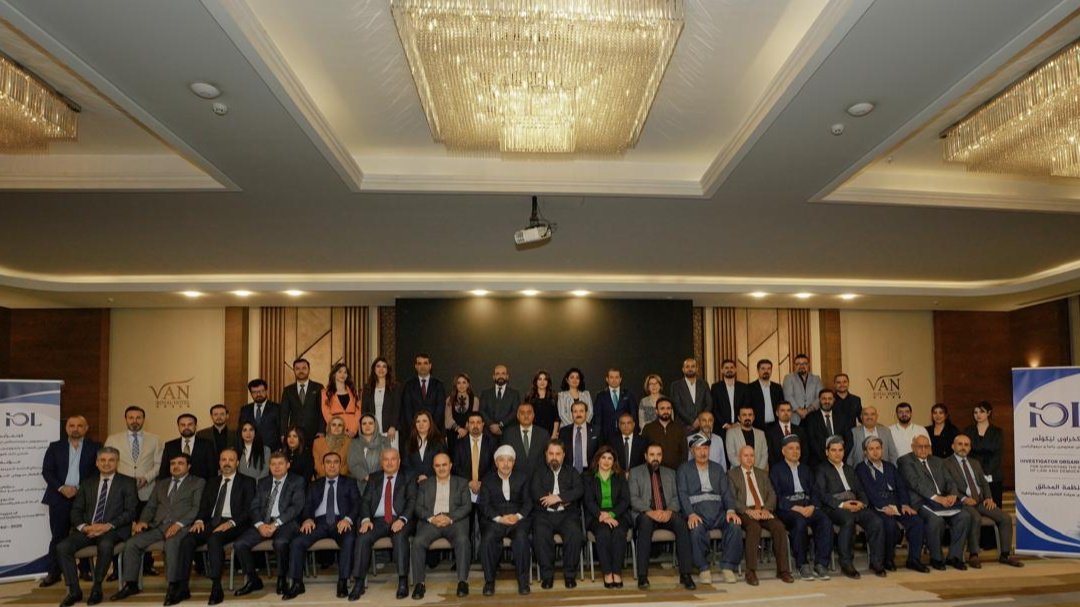
The conference was attended by representatives of the Kurdistan Region Presidency, the Kurdistan Regional Government, the Kurdistan Parliament, the Judicial Council, the Ministry of Endowment and Religious Affairs, the Ministry of Justice, the Public Prosecution, the Office of KRG Coordination for International Advocacy(OCIA) the Independent Human Rights Commission, the Kurdistan Union of Islamic Scholars, Kurdistan Bar Association, Yazidi Spiritual Council, Yazidi community activists and researchers, academics, and representatives of civil society organizations.
The conference was held as part of the activities of the project “Building Peace and Stability in Iraq,” with financial support from the Italian organization UPP and the British FCDO.
The conference aimed to discuss the Sharia and legal aspects of this issue, present the challenges, and identify suitable solutions for guaranteeing these children’s rights, within the framework of strengthening coexistence and social stability.
During the conference, Dr. Dindar Zebari, Coordinator of International Recommendations in the Kurdistan Regional Government, delivered a speech highlighting the different aspects of this problem. He pointed to the responsibility of the Kurdistan Regional Government and the Iraqi government to find a legal solution to this issue.
Dr. Abdullah Saeed Wisi then presented a summary of his study on determining the child’s religious identity from the mother when the father is absent, from a Sharia perspective.
Next, retired judge Salem Rawdhan presented a summary of his study on “The Dimensions of the Iraqi Judiciary and Legislative Policy Regarding Freedom of Religious Choice in Adulthood.”
The floor was then opened for discussion, and attendees enriched the topic with their opinions and comments.